
 Dec 6, 2025 CytoSolve® Events Upcoming CytoSolve® Metabolic Health Symposium
Jan 6, 2026 11.00 AM EST Metabolic Health is a complex syndrome. There are many molecular pathways involved in understanding this complexity. Join the next CytoSolve® Symposium to learn more about Metabolic Health.
Register to join our next Symposium on Metabolic Health.
CytoSolve® DigesT™ Supports Metabolic Health
This proprietary blend of wild-crafted herbs sourced from India honors East and West to Supports Metabolic Health.
 Order DigestT™ to support CytoSolve® research.
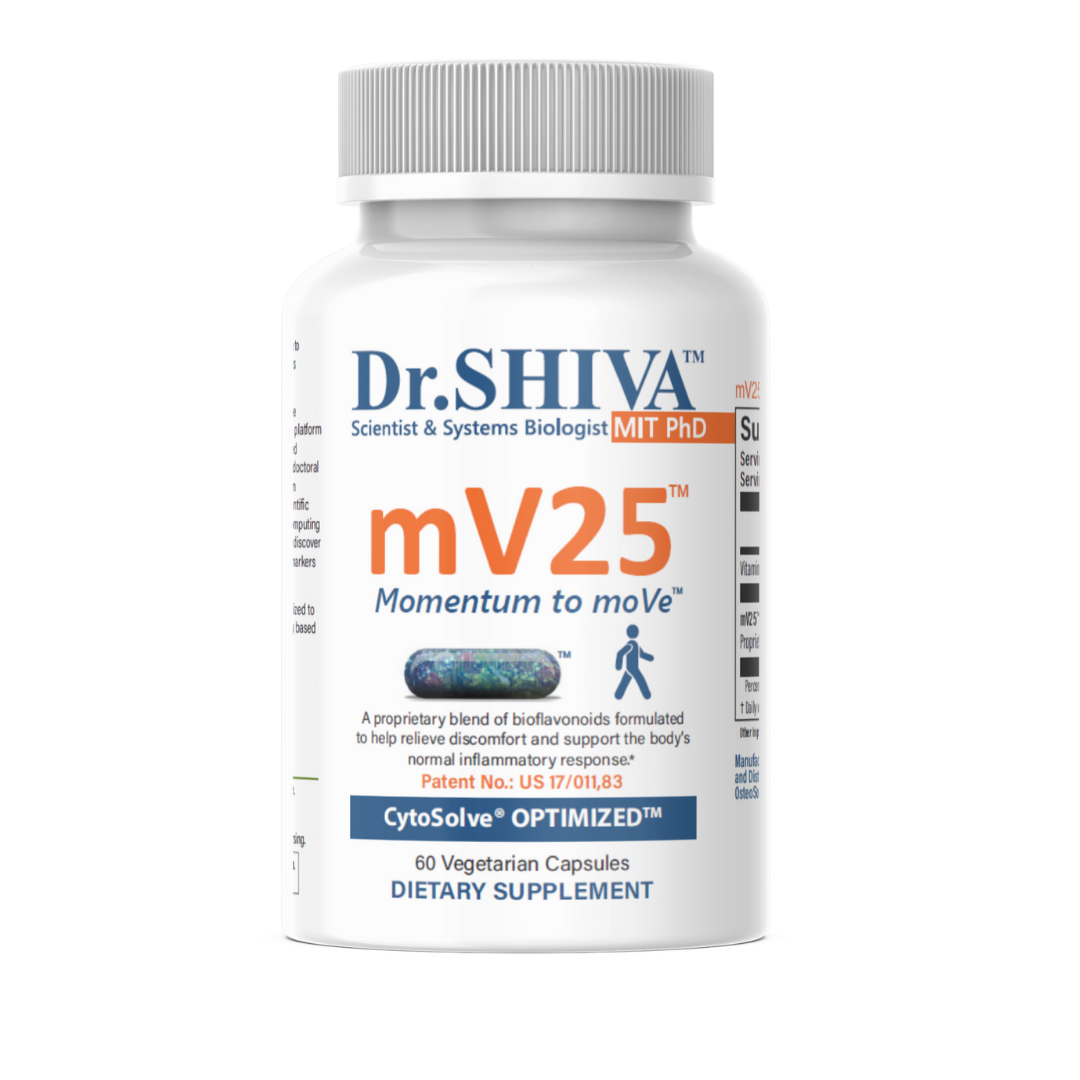
CytoSolve® mV25™ Supports Joint Health
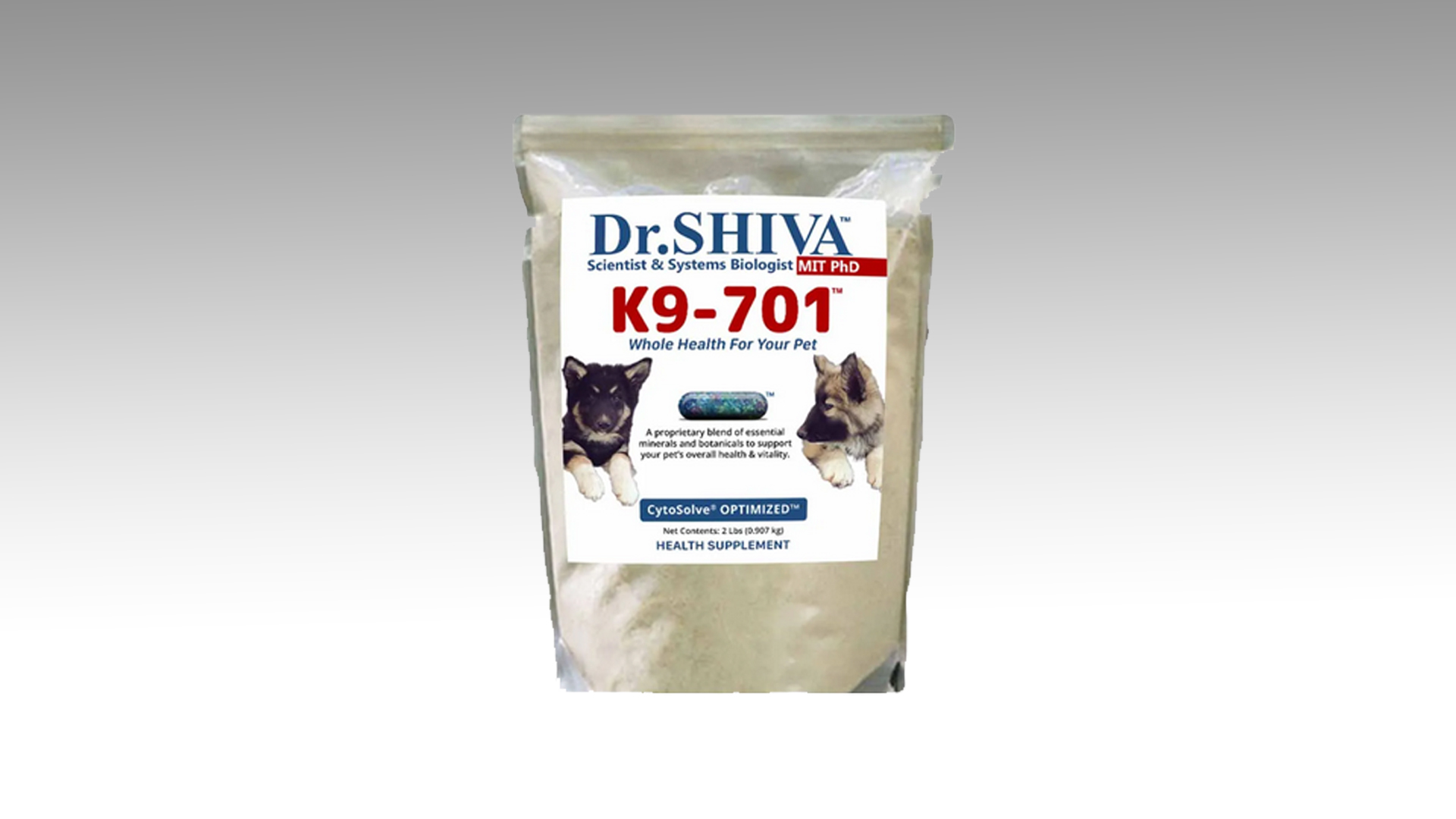
Innovative Companies Choose CytoSolve® to Build Real ProductsThat Deliver Real Pet Health
The Natural Vet® used CytoSolve® to validates the efficacy of Redoxx® in improving energy metabolism and Bug Check® in providing repellent activity for horses, cats, and dogs.
 If your company, large or small, has the courage to innovate products that actually work based on the molecular mechanistic understanding of scientifically proven biochemical reactions, then schedule an appointment with CytoSolve® to learn more.
Recent CytoSolve® Patents
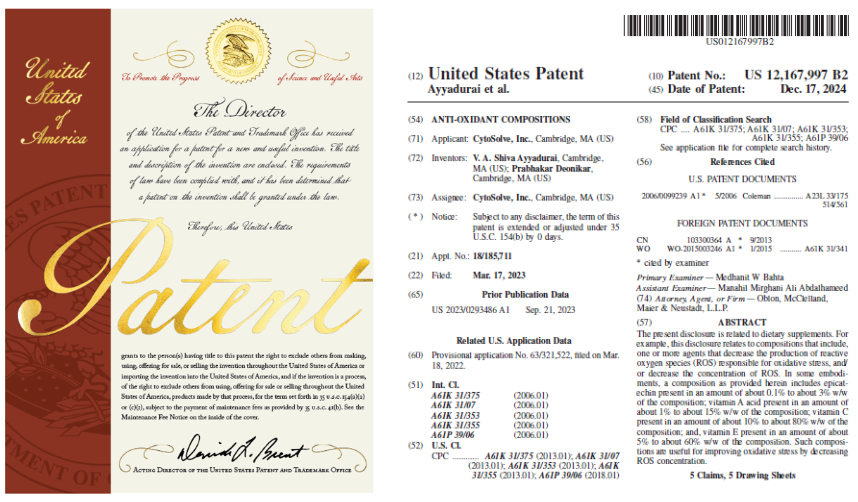
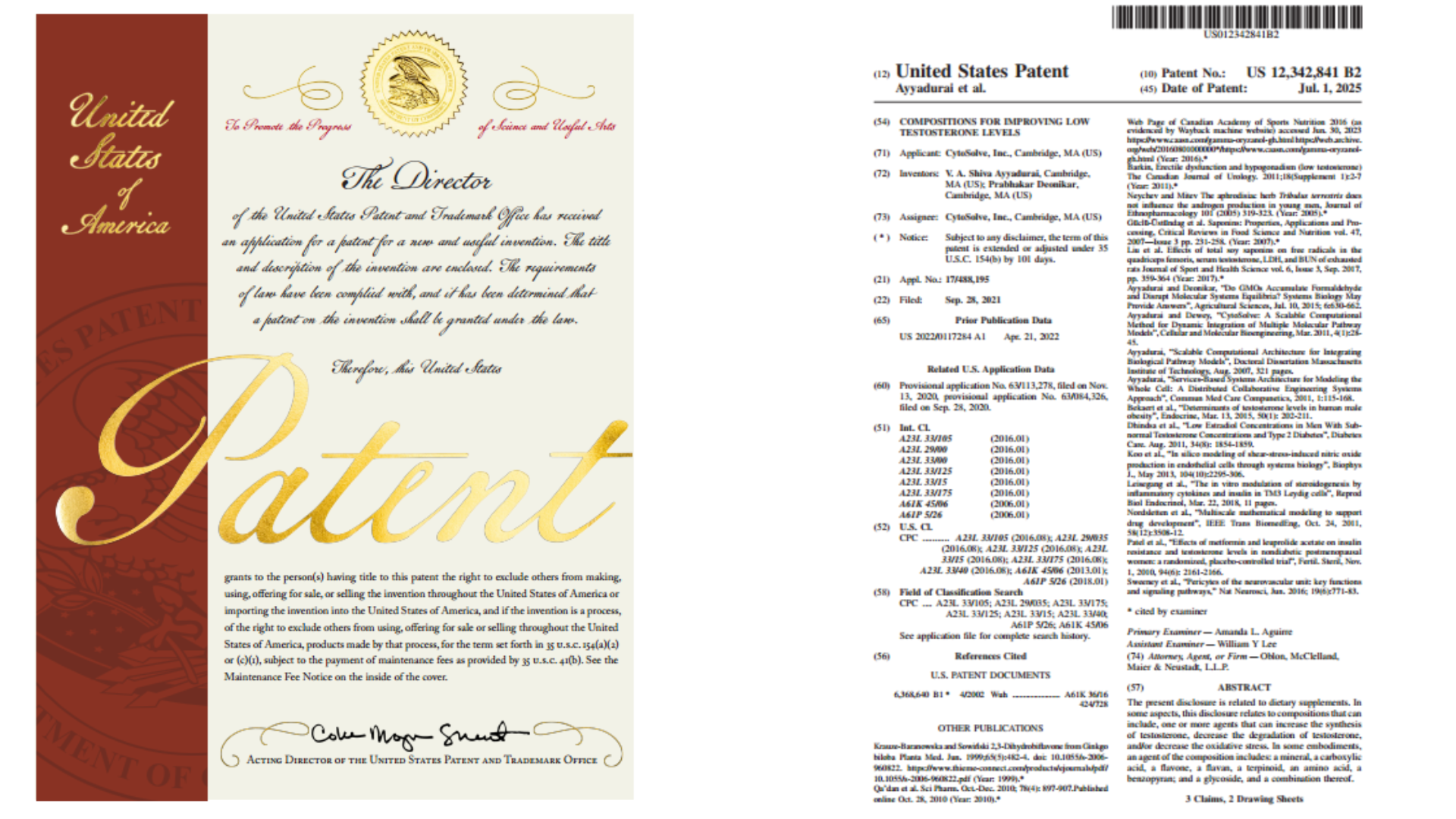
CytoSolve® has recently been awarded patents by the United States Patent and Trademark Office for its innovative work in Joint Health, Antioxidant Protection, Low Grade Inflammation, and Men’s Health.
US Patent for Anti-oxidant Formulation
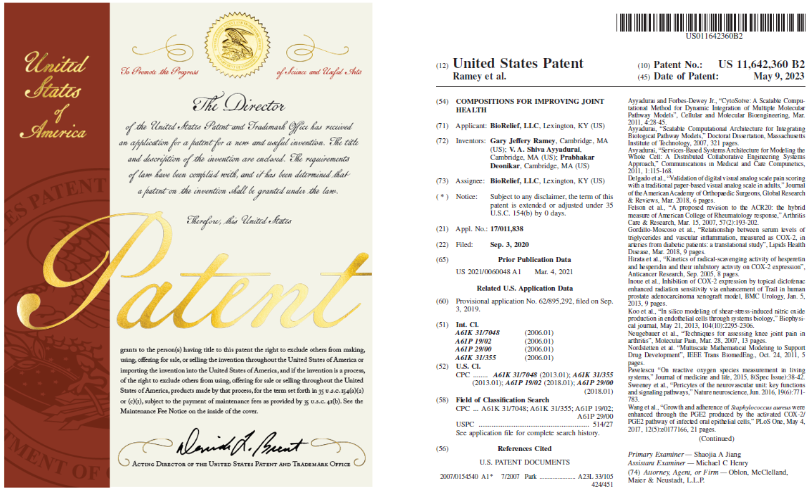 Joint Health Formulation Patent
Schedule an appointment if you would like to learn how to innovate new products or license CytoSolve’s US patents.
Donate to Support Our Research at the
Open Science Institute™
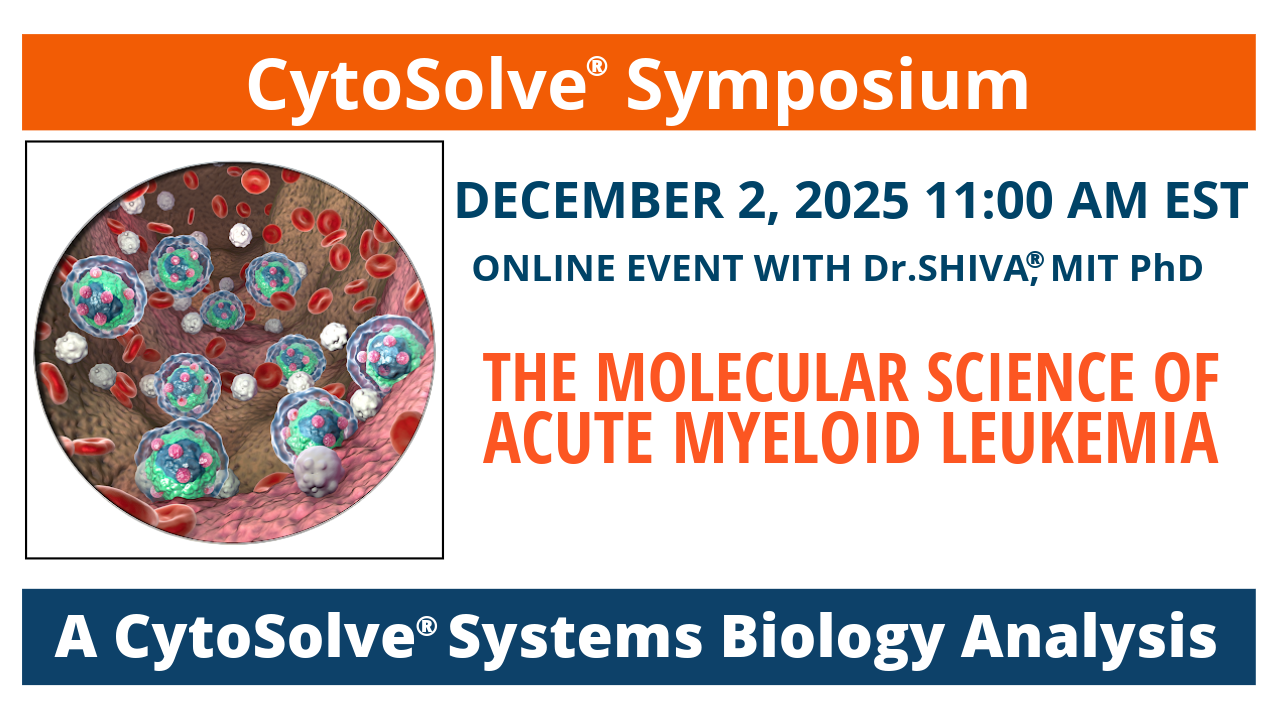
Recent CytoSolve® Acute Myeloid Leukemia
Watch below if you missed it.
CytoSolve® Open Science Institute™ is providing a new paradigm for finding solutions to address Acute Myeloid Leukemia. Here are the results from our latest symposium on Acute Myeloid Leukemia.
For those of you who missed it, click below to watch the entire Symposium
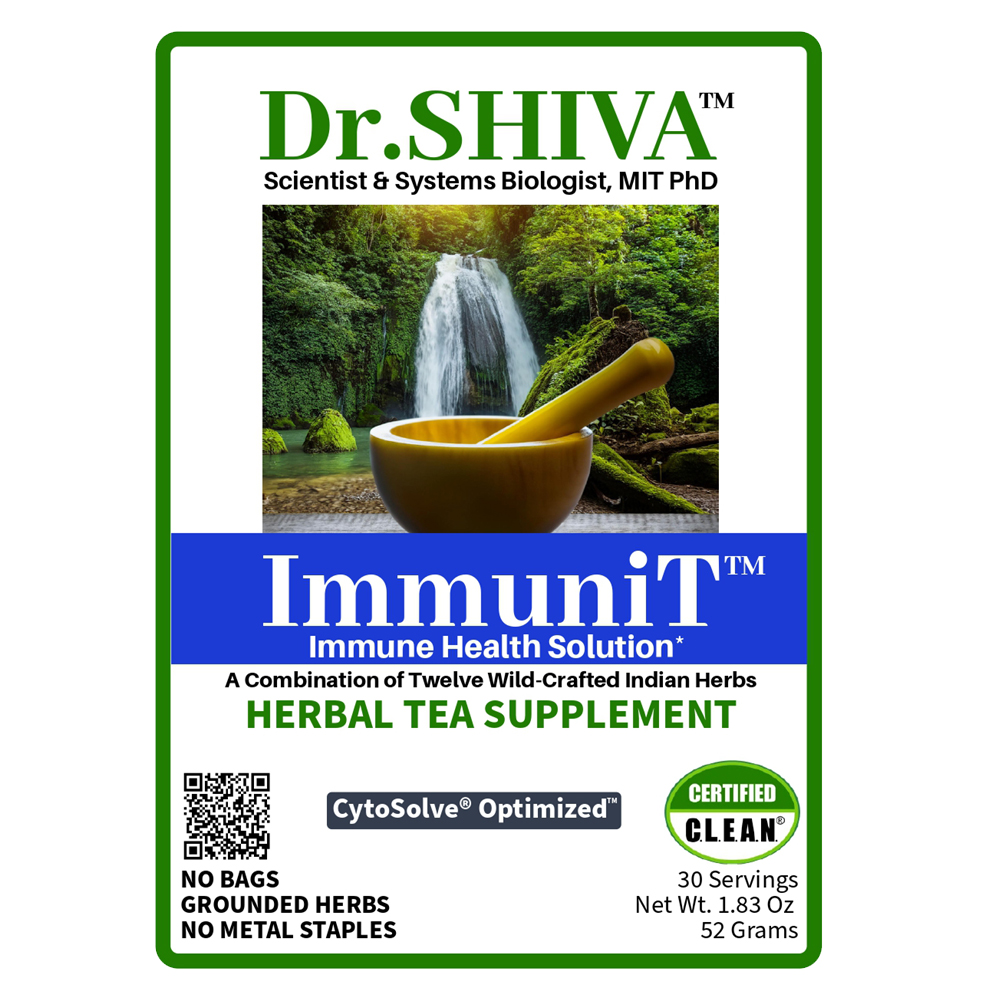
CytoSolve® ImmuniT™ Supports Immune Resilience This proprietary blend of wild-crafted herbs sourced from India honors East and West to support Immune Resilience.
mV25™ for Joint Health Listen to how mV25™ created by CytoSolve® helped Barb, a grandmother of five, helped overcome her excruciating joint pain.
Previous CytoSolve® Symposia
Recent CytoSolve® Peer – Reviewed Publications
Invest in CytoSolve® Spin-off Companies
CytoSolve® has a portfolio of 20 spin-off companies in the area of Joint Health, Bone Health, etc. We are now inviting exploratory meetings with investors.
Click below to set up an initial 15 minute appointment with the management at CytoSolve®.
Become a CytoSolve® Business Partner
CytoSolve® is now scheduling appointments with those who would like to become resellers of CytoSolve® products and services.
Click below to set up an initial 15 min appointment with the management at CytoSolve®. 701 Concord Avenue, Cambridge, MA 02138. Email: info@CytoSolve.com. Phone: +1.617.553.1015. © 2025. CytoSolve, Inc. All rights reserved.     |
||||||||||||||||||||||||||||||||||||








Agricultural Sciences, 2015, 6, 630-662 © 2015 by authors and Scientific Research Publishing Inc.
DOI: 10.4236/as.2015.67062
Abstract:
Safety assessment of genetically modified organisms (GMOs) is a contentious topic. Proponents of GMOs assert that GMOs are safe since the FDA’s policy of substantial equivalence considers GMOs “equivalent” to their non-GMO counterparts, and argue that genetic modification (GM) is simply an extension of a “natural” process of plant breeding, a form of “genetic modification”, though done over longer time scales. Anti-GMO activists counter that GMOs are unsafe since substantial equivalence is unscientific and outdated since it originates in the 1970s to assess safety of medical devices, which are not comparable to the complexity of biological systems, and contend that targeted GM is not plant breeding. The heart of the debate appears to be on the methodology used to determine criteria for substantial equivalence. Systems biology, which aims to understand complexity of the whole organism, as a system, rather than just studying its parts in a reductionist manner, may provide a framework to determine appropriate criteria, as it recognizes that GM, small or large, may affect emergent properties of the whole system. Herein, a promising computational systems biology method couples known perturbations on five biomolecules caused by the CP4 EPSPS GM of Glycine max L. (soybean), with an integrative model of C1 metabolism and oxidative stress (two molecular systems critical to plant function). The results predict significant accumulation of formaldehyde and concomitant depletion of glutathione in the GMO, suggesting how a “small” and single GM creates “large” and systemic perturbations to molecular systems equilibria. Regulatory agencies, currently reviewing rules for GMO safety, may wish to adopt a systems biology approach using a combination of in silico, computational methods used herein, and subsequent targeted experimental in vitro and in vivo designs, to develop a systems understanding of “equivalence” using biomarkers, such as formaldehyde and glutathione, which predict metabolic disruptions, towards modernizing the safety assessment of GMOs.